
A highschool teenage girl has to question her future decision when she turned down a marriage proposal, leading to other proposals and the harrowing superstition that haunting her resolve.
Why It’s Worth Watching
If not to rebuke, Yuni has strongly depicted the norm of earlier marriage in countrysides, which narrows the community’s expectation of women’s life goals, solely to become a housewife. Nevertheless, the bland premise doesn’t do enough justice to the astounding as well as unsettling nuance the story successfully achieved as we gradually learn the myth, the men who propose to Yuni, and what the future holds, not only for Yuni but also for her peers.
The Norm and the Superstition
Though my memory is a bit vague, I recall one of my college friends said that some of her peers in her neighborhood had already married and she began to feel the pressure that she expected would be thrown by her family and the people next doors. At that time, we were working on our undergraduate thesis and she was just in her early 20s. Yet, that age is also the beginning of the period when most females are asked to consider finding a spouse.
As a male and also a person who doesn’t live in a rural community with a strong conservative viewpoint, I wouldn’t know what she truly feels about it. Despite that, Yuni‘s mixture of the conventional practice and the myth that accompanies it has somehow struck me with the strange feeling, that is similar to being trapped.
As the central character of this movie, Yuni (Arawinda Kirana) isn’t a fan of this idea and has very little interest in the romance that blooms and is shown between the people around her age.
Yuni is described as a smart student who were planning to continue her study. But, it isn’t as what you expected from your typical coming-of-age movie. There isn’t almost a single person, especially an older woman, who she can look up to, a character who defines and assures her that the choice she made is worth fighting for. Thus, we wouldn’t see Yuni crams for her exams or enthusiastically talks about her dream. She rather has to face the great struggle forced by her community.
As we progress, we slowly learn one of her friends, of the same age, has apparently got married and owns a child. As Yuni and the gang pay visit to her house, we are shown a glimpse of the pitiful side of this unripe marriage that foreshadows the main issue Yuni is about to face.
The pitiful side of underage marriage shown here gradually becomes dreadful. There’s another girl in Yuni’s school who presumably got unwanted pregnancy. Also, Yuni’s friend was caught red-handed while being alone with her boyfriend in a secluded area and she was later forced to marry her boyfriend, even though they were merely suspected of doing the indecent deed. And, what follows after these two teenage girls is quite unsettling.
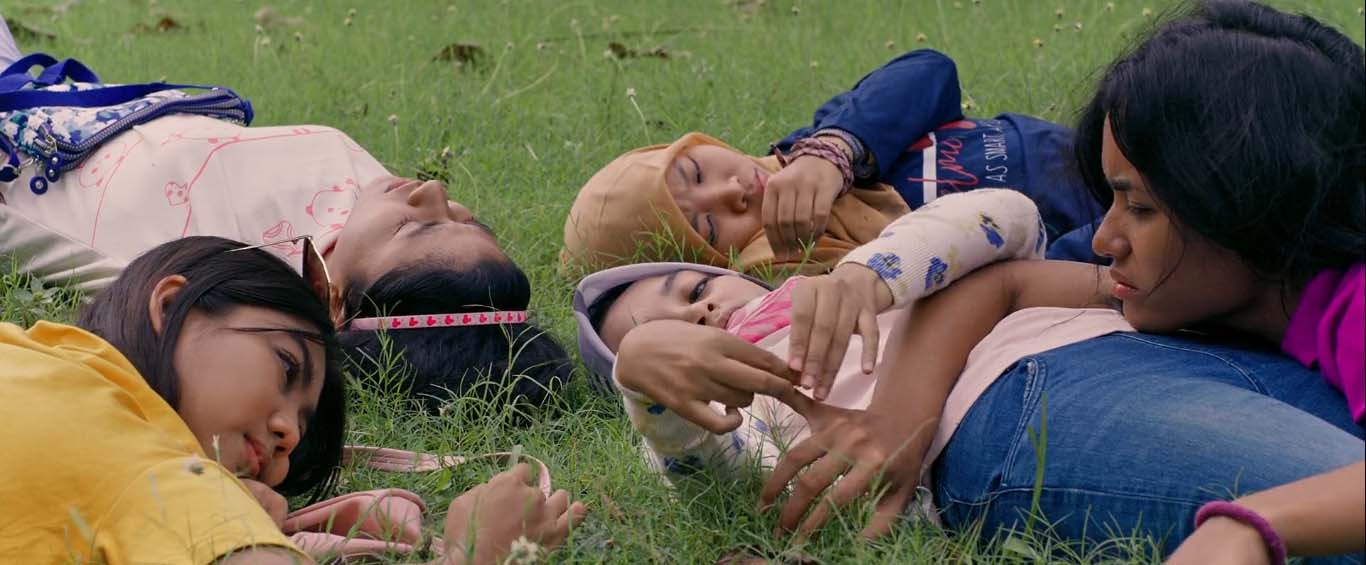
In the end, the grim facade of this once so-called romantic relationship seeps into Yuni’s life. The first proposal comes from a man she meets only one time. Knowing little of him, she abruptly rejects the offer. But, there’s a price for her action. The people next door and her classmates begin throwing the infamous superstition that there will be no other proposals again after dropping them three times.
As viewers, we may find that Yuni’s choice is justifiable and we may shout “you deserve more than this man”. It’s even more true when you see who the second man is. Yet, Yuni isn’t a one-layered story. Indeed, Yuni rejected the first two proposals with all of her might. But, the movie always follows the same formula by allowing the intermediate momentum between the initial proposals and Yuni’s final conclusion to refuse them. By this mean, we also witness how she confronts her internal struggle and how others’ perceptions can affect her decision. Because of that, it’s never been easy whether she accepts or rejects it anymore.
The Proposal and the Answer
The director Kamila Andini brings noteworthy storytelling that doesn’t blatantly blame the norm, the underage marriage. There is truly a “show don’t tell” aspect in it. She hints at the fault in the norm and how the people in the rural community perceive it, who even support it voluntarily or just accept it with resignation. After all, the practice is still common to this day and having “a big dream” is the thing that is considered uncommon here, more surreal than the superstition itself.
There are two distinct perceptions of the norm and we can see it clearly from the people around Yuni. And, here’s the thing: the differences are strongly influenced by whether the person ever leaves the town or not.
A quite ironic side of it is the saying from one of the senior teachers in Yuni’s school:
“These students shouldn’t be encouraged with big dreams, especially scholarships… Our school still lacks many things… You have to consider their backgrounds, especially girls. Perhaps their parents would rather marry them off than put them through school.”
The same can be said of Yuni’s grandmother and her friends. Although the grandmother openly accepts any decision her granddaughter made, she still shares a similar view with her peers, that women only matter in the kitchen, laundry, and bed.
Naturally, Yuni’s parents, who take collar-blue jobs in the capital city, prefer her to continue higher studies. They realize the taste of being low-wage labor with minimum worker’s right and they somehow convey that there isn’t much future their homeland can offer to Yuni. The same is also expressed clearly by Yoga (Kevin Ardilova), the boy who has a crush on Yuni. However, even they are on the same side as Yuni, they never really pose disapproval whenever the proposals landed on Yuni as they have no power against it. And, it always comes to Yuni who affirms the last decision.
Yuni isn’t the only one that has to deal with a problem of her own and the place she lives in. There are also Bu Lies (Marissa Anita) and Suci (Asmara Abigail). Unlike Yuni’s parents who fall into the gray area, they are still able to provide an outlook that gives Yuni reasons to refuse the norm. Bu Lies, Yuni’s teacher, is the one who supplies information and convinces her about the scholarship (as well as denies the senior teacher we were quoting earlier). Suci, on the other hand, is an independent woman who lives through her divorce, and her story gives enough base for Yuni to see that marriage doesn’t always yield a happy ending. Eventually, both Bu Lies and Suci leave the town, in search of better lives they can’t find anywhere in this town. Bu Lies is doing it for a greater good, while Suci is doing it for her own good.
In the last act of this movie, the third man who proposes to Yuni is revealed, the man who we already know but holds a kinda shocking secret, really. It just makes the third isn’t any better than the last two. It even convolutes the purpose of the proposal or the marriage itself.
In spite of the harrowing norm of underage marriage and superstition, Yuni has its own heartwarming moments that add a sense of closeness to the already gut-wrenching theme. Yuni’s conversation with her dad is intimate enough it expels the dark, alienating feeling of Yuni’s world, even only briefly.
There are many interpretations as we come near the end, especially whether Yuni accepts the third proposal or not. Regardless of how the movie wraps up the ending, it is not whether Yuni accepts or turns down the proposal that really becomes the question. It’s more about whether Yuni decides to stay or leaves.
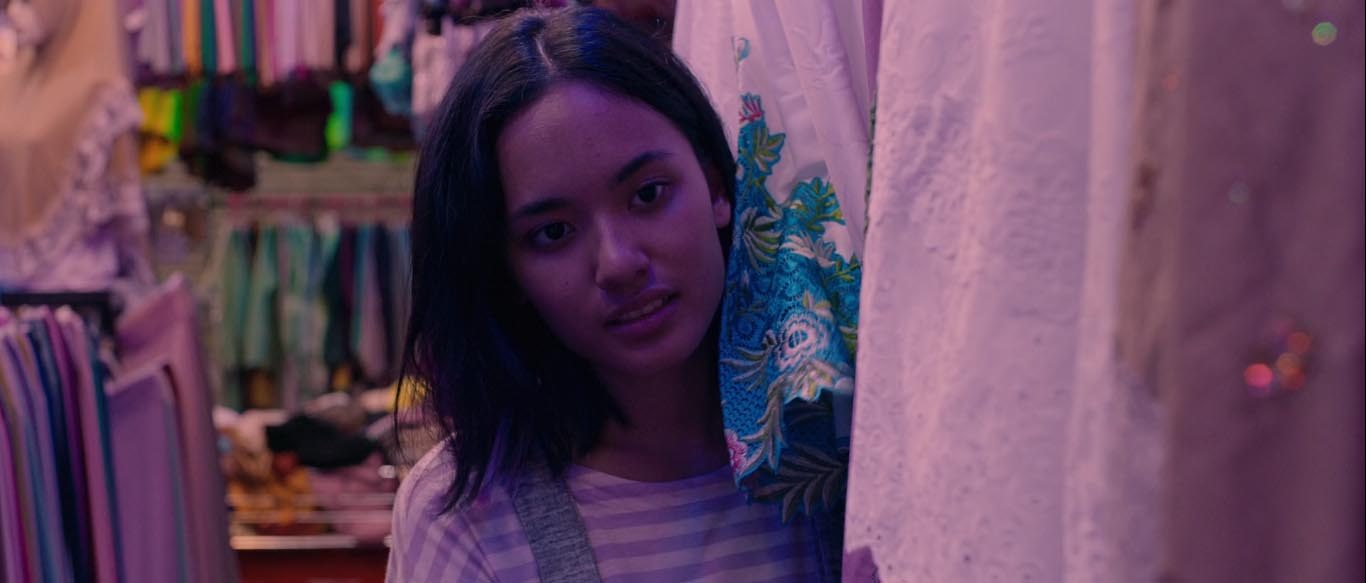
Quote
“But Yun… Now I think of it. Is there any life that isn’t difficult?“

A great coming-of-age movie that gracefully shows the unnerving side of the norm of underage marriage.
Where to watch:

Director: Kamila Andini
Genre: Drama
Scriptwriter: Kamila Andini, Prima Rusdi
Runtime: 1 hour 35 minutes
 KomidiGambar